Duccio’s omen before the ski race
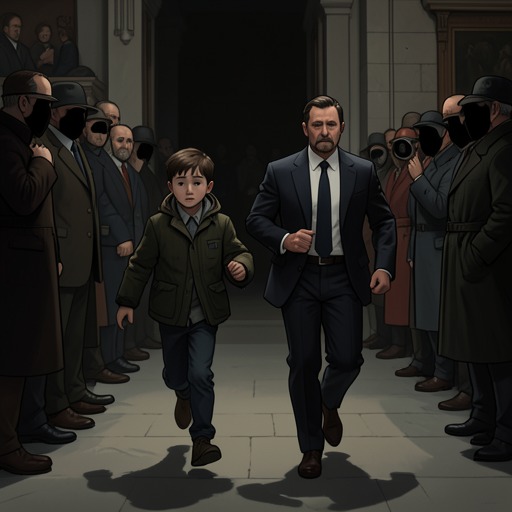
The HummingbirdDuccio’s omen before the ski race is the incident that turns a young skier’s prediction into a lasting reputation for bad luck. At an interzonal giant-slalom qualifier at Zum Zeri–Passo dei Due Santi, Duccio Chilleri says that his rival Tavella will fall and be hurt; Tavella crashes in the fog immediately after Duccio’s run, and the accident is remembered alongside Duccio’s words.
The race and the prediction
Duccio had finished the first heat in second place in his category, behind Tavella, a champion from Modena whom the account describes as unpleasant. Conditions were severe: strong wind and fog had led the jury to consider canceling the race. The wind later eased, but the fog thickened, and the second heat went ahead despite the poor visibility.
While Duccio waited to start, his father and coach warmed his legs and urged him to attack the course and beat Tavella. At the starting gate, just before setting off onto the nearly invisible track, Duccio made his prediction: “So he falls, and he also hurts himself.” He completed the run in the fastest time.
Tavella’s fall and its aftermath
Tavella started immediately after Duccio. The fog prevented spectators from seeing clearly what happened, but a cry from the course alerted those nearby. Judges found Tavella down after a crash. He survived, but the accident was remembered as the most serious in the history of the ski resort; the account notes that wooden course stakes were still in use at the time.
Because the prediction preceded the accident and seemed to match its outcome, the two became inseparable in local memory. The story does not establish that Duccio caused the fall or possessed supernatural knowledge. Rather, the uncertain conditions and the striking sequence of prediction and accident helped transform coincidence into apparent evidence of a curse.
The making of the Unnameable
The crash marks the beginning of Duccio’s reputation as a jinx. By the beginning of adolescence, he was regarded as someone who brought bad luck, and the label followed him without redemption. His childhood nickname had been Blizzard, taken from the brand of skis he used while competing in the Tuscan-Emilian Apennines in the Puppy category and later in Students and Aspirants. As he grew older, he became known as the Unnameable.
The narrative draws a suggestive connection between the two names: “blizzard” means “storm,” seeming to foreshadow the later identity associated with the eye of the storm. It also mentions a tempting but unreliable association between Chilleri and the English word “killer,” then rejects it as a likely false etymology. The account emphasizes that nobody had investigated the rumor’s beginnings or meanings. Duccio’s reputation endured not because it was carefully examined, but because the accident made the story easy to repeat.
Narrative significance
The episode gives Duccio’s reputation a specific origin while preserving the ambiguity that lets superstition grow. His words are recorded before Tavella’s fall, but the fog obscures the event itself; the reader receives a memorable prediction and a matching outcome without proof of a causal connection. The result is a chain of association rather than a demonstrated power.
The incident also anticipates Duccio’s later nickname, the Unnameable, through the earlier image of Blizzard and storm. A single race therefore becomes more than a sporting mishap: it supplies the anecdote through which others interpret Duccio, while the lack of deeper inquiry allows that interpretation to harden into fate.